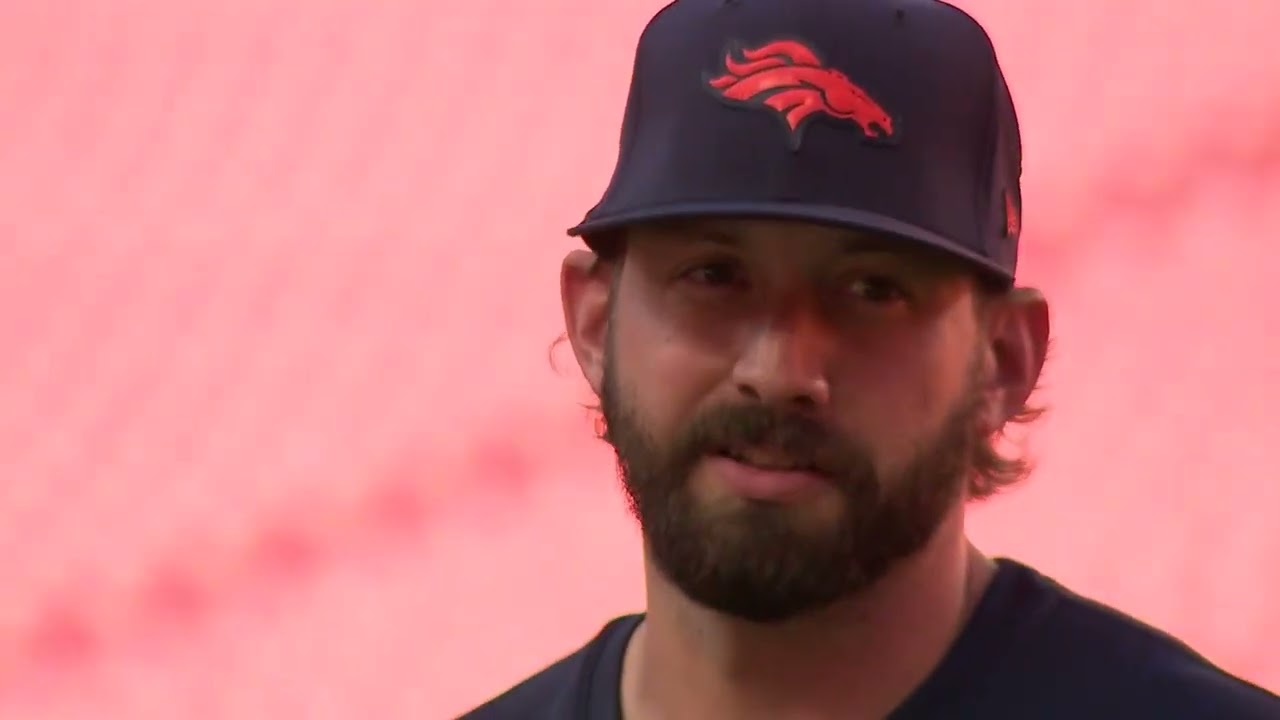
Since Sean Payton arrived in Denver two years ago, the production from the Broncos tight end room has been abysmal. This is like Kansas City having no good BBQ. Or New York having no good pizza. Sean Payton, the play caller, has made a living using the tight end to exploit defenses, and yet, Lucas Krull led that room last season with 19 catches for 154 yards and no touchdowns.
This has to change.
In 2009, after getting cut by the Broncos, I spent that off-season trying to get back into the league. Late in training camp, the New Orleans Saints, coached by Sean Payton, had an injury to their #2 tight end, Billy Miller. Billy was a big part of their offense, as Sean liked to use two tight end packages, so they needed to sign a veteran. I was one of the veterans who got a workout. There were four of us. This was my third workout in as many weeks, and the others had taken place on a side field with a scout and a random dude throwing us the ball. This Saints workout would be much different.
As the four of us took the field, we were surprised to find quarterback Drew Brees out there to throw to us and Sean Payton to lead us through the workout. For the next hour, Payton put us through a series of routes that they valued in the system, and the part that stuck with me was how many different seam routes we ran.
A “seam” is when you run down the middle of the field, somewhere between the hashes, and bend your path according to the coverage. There is a great deal of nuance to NFL coverages, and so this bending of the “seam” also gets very nuanced. We ran it about five different ways, and Drew Brees put it right on the money every time. I’ve thought about that workout a lot over the last two years, as I’ve watched the middle of the field on Broncos game days, wondering why none of these tight ends are running down the seams.
I guess it really does boil down to personnel. Although Sean Payton wants to throw to the tight end, he isn’t going to force it with a guy who doesn’t give him that special feeling. They hoped it would be Greg Dulcich, but he didn’t pan out. Then they made eyes at Lucas Krull. He still may turn into a good pro, but despite his prototypical tight end size and speed, something isn’t clicking there, so you take another swing.

Since Sean Payton arrived in Denver two years ago, the production from the Broncos tight end room has been abysmal. This is like Kansas City having no good BBQ. Or New York having no good pizza. Sean Payton, the play caller, has made a living using the tight end to exploit defenses, and yet, Lucas Krull led that room last season with 19 catches for 154 yards and no touchdowns.
This has to change.
In 2009, after getting cut by the Broncos, I spent that off-season trying to get back into the league. Late in training camp, the New Orleans Saints, coached by Sean Payton, had an injury to their #2 tight end, Billy Miller. Billy was a big part of their offense, as Sean liked to use two tight end packages, so they needed to sign a veteran. I was one of the veterans who got a workout. There were four of us. This was my third workout in as many weeks, and the others had taken place on a side field with a scout and a random dude throwing us the ball. This Saints workout would be much different.
I guess it really does boil down to personnel. Although Sean Payton wants to throw to the tight end, he isn’t going to force it with a guy who doesn’t give him that special feeling. They hoped it would be Greg Dulcich, but he didn’t pan out. Then they made eyes at Lucas Krull. He still may turn into a good pro, but despite his prototypical tight end size and speed, something isn’t clicking there, so you take another swing.

Since Sean Payton arrived in Denver two years ago, the production from the Broncos tight end room has been abysmal. This is like Kansas City having no good BBQ. Or New York having no good pizza. Sean Payton, the play caller, has made a living using the tight end to exploit defenses, and yet, Lucas Krull led that room last season with 19 catches for 154 yards and no touchdowns.
This has to change.
In 2009, after getting cut by the Broncos, I spent that off-season trying to get back into the league. Late in training camp, the New Orleans Saints, coached by Sean Payton, had an injury to their #2 tight end, Billy Miller. Billy was a big part of their offense, as Sean liked to use two tight end packages, so they needed to sign a veteran. I was one of the veterans who got a workout. There were four of us. This was my third workout in as many weeks, and the others had taken place on a side field with a scout and a random dude throwing us the ball. This Saints workout would be much different.
As the four of us took the field, we were surprised to find quarterback Drew Brees out there to throw to us and Sean Payton to lead us through the workout. For the next hour, Payton put us through a series of routes that they valued in the system, and the part that stuck with me was how many different seam routes we ran.
A “seam” is when you run down the middle of the field, somewhere between the hashes, and bend your path according to the coverage. There is a great deal of nuance to NFL coverages, and so this bending of the “seam” also gets very nuanced. We ran it about five different ways, and Drew Brees put it right on the money every time. I’ve thought about that workout a lot over the last two years, as I’ve watched the middle of the field on Broncos game days, wondering why none of these tight ends are running down the seams.
I guess it really does boil down to personnel. Although Sean Payton wants to throw to the tight end, he isn’t going to force it with a guy who doesn’t give him that special feeling. They hoped it would be Greg Dulcich, but he didn’t pan out. Then they made eyes at Lucas Krull. He still may turn into a good pro, but despite his prototypical tight end size and speed, something isn’t clicking there, so you take another swing.
“I think the pleasure that I take from it is just this idea of we’ve created this world, these characters, and then we get to show up at work and fuck with each other. It’s the best.”
Since Sean Payton arrived in Denver two years ago, the production from the Broncos tight end room has been abysmal. This is like Kansas City having no good BBQ. Or New York having no good pizza. Sean Payton, the play caller, has made a living using the tight end to exploit defenses, and yet, Lucas Krull led that room last season with 19 catches for 154 yards and no touchdowns.
This has to change.
In 2009, after getting cut by the Broncos, I spent that off-season trying to get back into the league. Late in training camp, the New Orleans Saints, coached by Sean Payton, had an injury to their #2 tight end, Billy Miller. Billy was a big part of their offense, as Sean liked to use two tight end packages, so they needed to sign a veteran. I was one of the veterans who got a workout. There were four of us. This was my third workout in as many weeks, and the others had taken place on a side field with a scout and a random dude throwing us the ball. This Saints workout would be much different.
As the four of us took the field, we were surprised to find quarterback Drew Brees out there to throw to us and Sean Payton to lead us through the workout. For the next hour, Payton put us through a series of routes that they valued in the system, and the part that stuck with me was how many different seam routes we ran.
A “seam” is when you run down the middle of the field, somewhere between the hashes, and bend your path according to the coverage. There is a great deal of nuance to NFL coverages, and so this bending of the “seam” also gets very nuanced. We ran it about five different ways, and Drew Brees put it right on the money every time. I’ve thought about that workout a lot over the last two years, as I’ve watched the middle of the field on Broncos game days, wondering why none of these tight ends are running down the seams.
I guess it really does boil down to personnel. Although Sean Payton wants to throw to the tight end, he isn’t going to force it with a guy who doesn’t give him that special feeling. They hoped it would be Greg Dulcich, but he didn’t pan out. Then they made eyes at Lucas Krull. He still may turn into a good pro, but despite his prototypical tight end size and speed, something isn’t clicking there, so you take another swing.